How Much Work Do Robots Really Deliver? The Thinking Behind Worken

As robots take on more responsibilities in the physical world, AGIBOT is proposing a new way to measure what matters after deployment: the useful work they actually complete.


【SHANGHAI, China, October 30, 2026】The robotics industry has made substantial progress in hardware, AI and large-scale manufacturing. Robots are becoming more capable, production volumes are growing, and applications are expanding from research environments into factories, warehouses and public spaces. As this progress continues, a new question is becoming increasingly important: How much productive work does a robot actually deliver?


For businesses deploying robots, the answer goes beyond whether a machine can perform a particular task. It also depends on how independently the robot operates, how consistently it completes its work, and whether the results meet the requirements of the workplace. AGIBOT believes these aspects of performance deserve greater attention as robots become part of everyday operations.


To explore this, the company has introduced Worken, a proposed measurement framework that connects the number of actively working robots with their autonomous working time and productive output. Combining the words "Work" and "Token", Worken represents an effort to make the contribution of physical AI more measurable. Its underlying idea is straightforward: the value of a working robot should also be understood through the useful work it delivers.


Why AGIBOT Is Proposing Worken

Manufacturing scale, technical performance and deployment growth are important indicators of progress in robotics. They demonstrate the industry's ability to develop increasingly capable machines and bring them into real-world environments. As robots become more widely deployed, businesses also need ways to evaluate what happens after those machines begin working.


Consider two factories operating the same number of robots. In one, the robots perform their assigned tasks independently for extended periods, consistently meeting production requirements. In the other, the robots require more frequent human intervention or complete fewer acceptable tasks during the same period. Both factories have deployed the same number of machines, but their operational results are different.


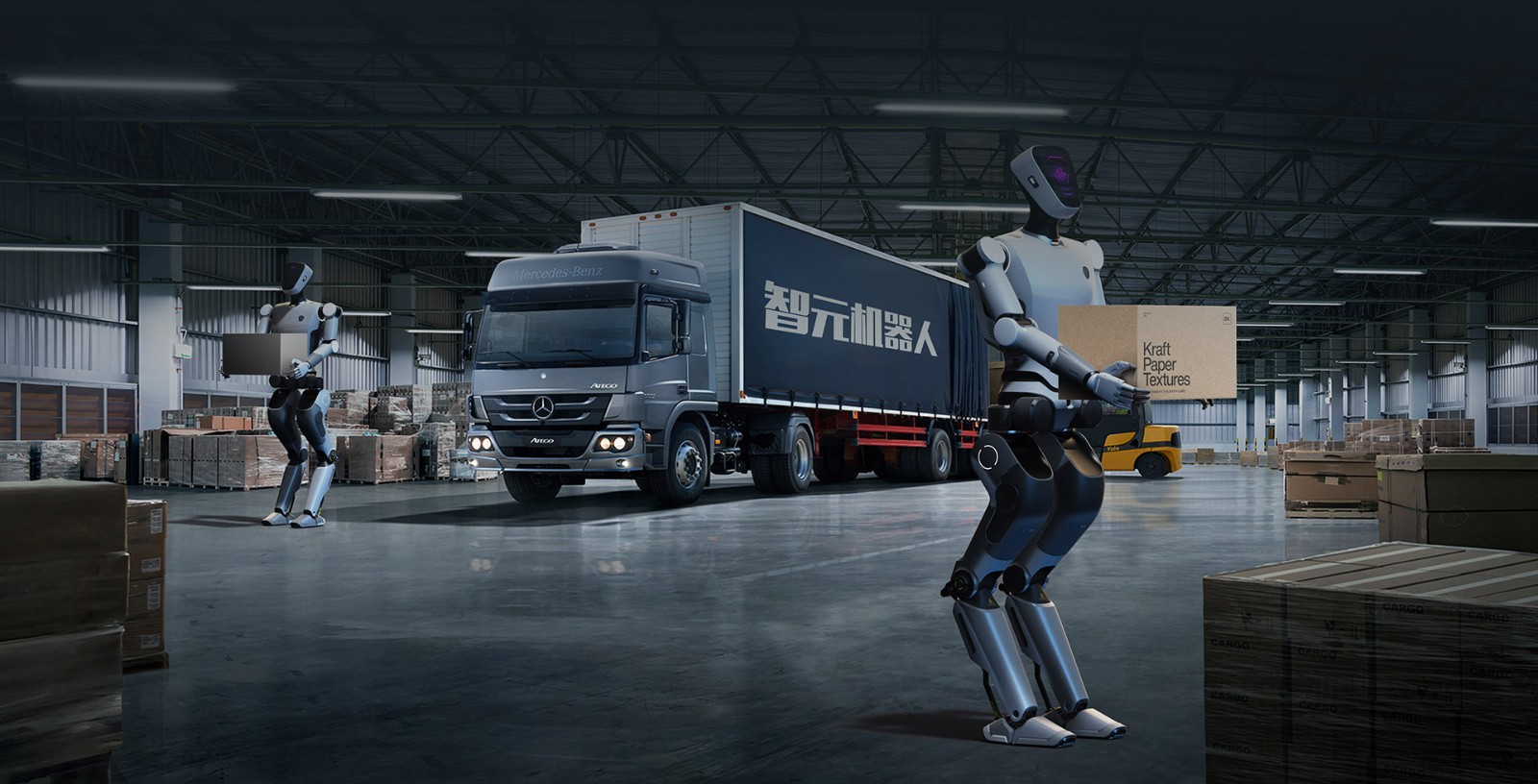
The same distinction applies across other environments. A logistics robot must do more than navigate a warehouse; it needs to complete deliveries reliably. A service robot must do more than conduct a conversation; it needs to assist people effectively. In each setting, the practical contribution of a robot depends on its ability to turn technical capabilities into completed work.


This is the thinking behind Worken. Rather than replacing established measures of robotics progress, Worken introduces an additional dimension: the amount of effective work performed by robots operating in the real world. 


What Worken Measures

AGIBOT defines Worken in terms of Effective Intelligent Work Hours, using three factors to describe robotic productivity:


Worken = Number of Active Robots × Autonomous Working Hours × Output Efficiency Ratio


1793350699113942.pngThe Worken framework introduced by Peng Zhihui, Co-founder, President, CTO and Executive Director of AGIBOT, combines the number of active robots, autonomous working hours and an output efficiency ratio to measure productive robot work in real-world deployments.


Number of Active Robots measures how many robots are actually performing tasks in an operating environment. The emphasis is on machines engaged in useful work, rather than simply the total number manufactured, delivered or installed. Autonomous Working Hours measures the time robots spend carrying out tasks independently, without continuous human control. This distinguishes productive autonomous operation from total powered-on time, which may include waiting, manual intervention or other nonproductive periods.


Output Efficiency Ratio evaluates the amount of acceptable work a robot completes against a defined task-specific benchmark. In manufacturing, for example, the reference might be an established hourly production standard. Together, the three factors connect the scale of an active robot fleet with how long it works autonomously and how effectively it delivers results.


This distinction matters because operating time alone is not the same as productive work. A robot may remain powered on throughout a shift, but the relevant questions are how much of that time it spends working independently and how much qualifying output it produces. Similarly, two robots may work autonomously for the same number of hours yet complete different amounts of acceptable work. Worken is designed to capture these differences in a more structured way.


It is important, however, to distinguish measuring productive output from assigning economic value. Worken is not a universal price for robotic labor, nor does a given Worken figure automatically represent the same financial value across different tasks. Its usefulness depends on clearly defined work, consistent operating records and appropriate reference benchmarks.


How Worken Could Be Used in Practice

The most practical starting point for Worken is a setting where tasks and performance requirements can be clearly defined. Consider a robot fleet carrying out material-handling tasks on a manufacturing line. The operator would first identify the robots actively performing the work, then record how long each robot operates autonomously and measure the acceptable output completed during that period. The output would subsequently be compared with an agreed benchmark for the particular task.


For illustration, suppose a production line has 10 active robots, each working autonomously for six hours during a shift. If their qualifying output corresponds to an efficiency ratio of 0.8 against the selected benchmark, the calculation would be: 


10 robots × 6 hours × 0.8 = 48 Worken


This is a hypothetical example, not a reported AGIBOT deployment result. The figure represents benchmark-adjusted autonomous working hours under the defined task and measurement conditions. The calculation itself is relatively simple, while the more important work lies in determining which operating hours qualify, what constitutes acceptable output and how the benchmark is established.


Once those definitions are consistent, Worken could offer several practical applications. A manufacturing operator could track changes in effective output over time. For example, a software update might enable robots to work more independently, reduce the need for intervention or complete more acceptable operations during a shift. Worken could help describe the resulting productivity improvement without relying solely on the number of robots deployed. The same approach could inform comparisons between similar operations using the same task standards, or help identify where a robot fleet is losing productive time.


AGIBOT's industrial deployments, including material-handling applications at Longcheer, provide real operating environments in which these questions can be explored. Production lines already place clear demands on cycle time, output quality and operational stability, making them potential settings for developing practical measurement methods.


Other applications require different benchmarks. For a service robot, useful work might involve successfully assisting a visitor, completing a guidance task or responding to a request. The criteria for acceptable output would differ from those used in industrial handling. This is why Worken must be applied in the context of specific tasks. A manufacturing operation and a customer-service interaction should not be treated as directly interchangeable simply because both generate a numerical result. The purpose is to make performance within a defined operating context more transparent, consistent and measurable.


What Worken Could Mean for the Future of Robotics

Worken's potential significance extends beyond measuring individual tasks. As robots become more capable, their productive performance may improve throughout their operating lives. A machine's hardware will generally depreciate over time, while its software, AI models and task execution capabilities may continue to improve through updates, better training and experience gained from real-world operations. The same robot could therefore become capable of completing more useful work without being replaced.


Worken offers a proposed way to examine that improvement through changes in autonomous working time and qualifying output. For businesses, this could add another dimension to evaluating robotic investments. Purchase price, integration, maintenance and operating costs remain central to deployment decisions. Understanding how much effective work a robot delivers alongside those costs could provide a clearer picture of its long-term productivity and cost-effectiveness.


Over time, more consistent measurement of robotic work might also inform commercial arrangements that place greater emphasis on completed tasks or verified service outcomes. That remains a longer-term possibility rather than an established Worken-based business model. Practical application will require reliable operational data, consistent task definitions and measurement approaches that can be tested and refined across deployments.


AGIBOT views Worken as an evolving framework. Its next stage will depend on accumulating experience in real working environments, developing suitable benchmarks and understanding where the approach provides meaningful insights. The ambition is not to reduce every aspect of robotics to a single number, as safety, reliability, quality, operating cost and technical capability will continue to matter. Instead, Worken seeks to bring greater attention to one fundamental outcome of physical AI: the work it accomplishes.


As robots take on more responsibilities across industries, the question is no longer only what they are capable of doing, but how consistently and effectively those capabilities translate into real-world productivity. Worken is AGIBOT's proposal for making that contribution more visible and measurable.


For more information, please visit AGIBOT.com and follow AGIBOT on:
X: https://x.com/AGIBOTofficial
LinkedIn: https://www.linkedin.com/company/agibot/
YouTube: https://www.youtube.com/@AGIBOTofficial
Instagram: https://www.instagram.com/agibotofficial/
TikTok: https://www.tiktok.com/@agibotofficial
Facebook: https://www.facebook.com/AGIBOTofficial/


About AGIBOT
AGIBOT is a pioneer in the global general-purpose AI robotics industry, with its core technology focused on embodied AI. AGIBOT's "Three Intelligences in One" architecture integrates Locomotion Intelligence, Interaction Intelligence, and Manipulation Intelligence into a unified embodied system. Its portfolio spans humanoid robots, quadrupeds, dexterous systems, and commercial cleaning solutions. In September 2026, AGIBOT announced that its 20,000th robot had rolled off the production line.